
ChivoxAI
/mandarin-chinese-assessment

Mandarin Chinese pronunciation assessment with tone-level detail

Assess Mandarin speech with the linguistic detail tonal languages require. Chivox exposes tone, syllable and fluency evidence so applications can explain errors clearly and coach the next attempt.

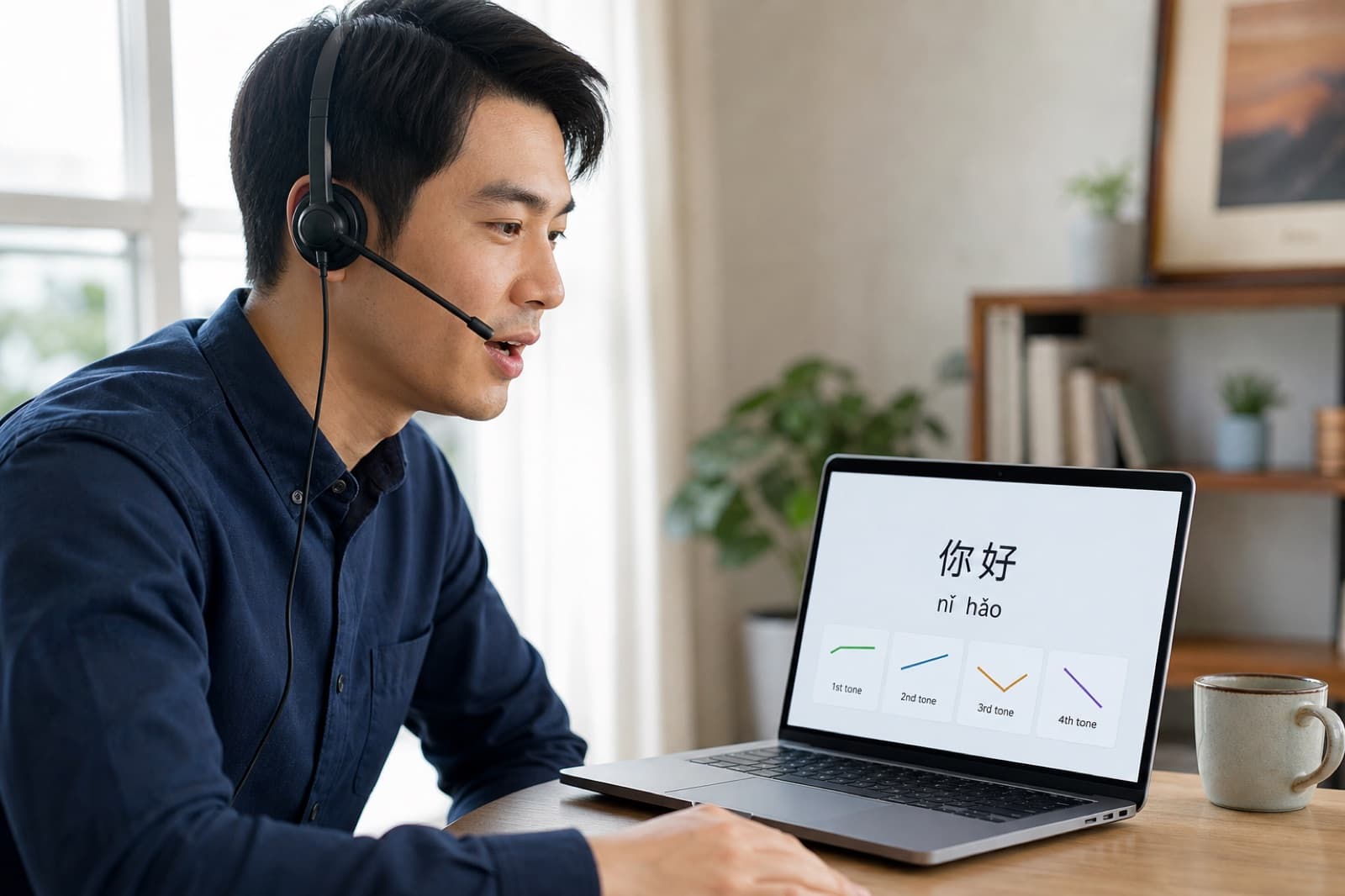
Learner practising Mandarin pronunciation with Pinyin and tone-contour feedback
Initials · finals · tones
Standard Mandarin scoring down to initials, finals and tones — aligned to Pinyin.
声 / 韵 / 调
scoring depth
Char → passage
task coverage
CFL + literacy
learning paths
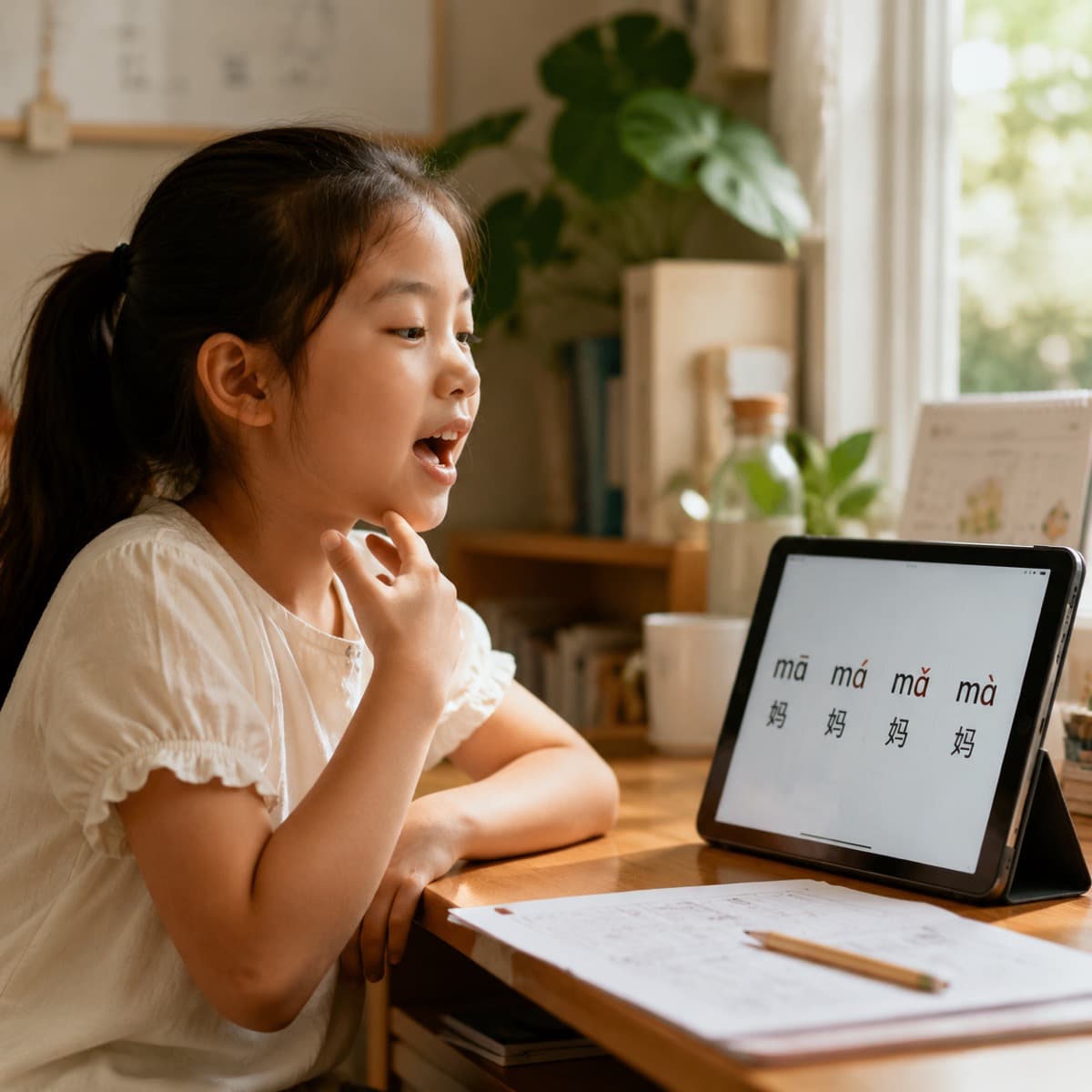
A young child practicing the four Mandarin tones of 妈 (mā má mǎ mà) aloud from a tablet
/Mandarin depth

Score what Mandarin actually means — not a generic speech mark

A single percentage can hide whether the problem is a segment or a tone. Designed against national-standard Putonghua practice, the response keeps initials, finals, tones and Pinyin-aligned syllable evidence available for precise diagnosis.

  • Initials, finals and tones scored for each evaluated syllable
  • Untoned, tone and syllable scores for finer teaching priorities
  • Pinyin-aligned detail that is easier to explain to learners
  • Character, word, sentence and paragraph reading coverage
  • Pronunciation, integrity and fluency signals in one result

Western learner in red Hanfu and headphones practicing Mandarin into her phone
/Where it ships

From CFL tutors to literacy practice and Putonghua checks

Use the same Mandarin engine for overseas Chinese learning, K-12 literacy (识字、朗读、背诵), poetry and dialogue practice, or Putonghua-style evaluation and large-scale speaking contests.

  • Chinese-as-a-foreign-language apps and HSK-oriented drills
  • AI tutors that explain tones in the learner’s preferred language
  • Literacy products: Pinyin, poetry, textbook reading and recitation
  • Scenario dialogue, article reading and dubbing-style practice
  • Putonghua evaluation and contest first-round screening at scale
A developer integrating a multilingual speech-assessment API, JSON visible in the editor
/One payload

Add Mandarin without building a separate agent architecture

English and Mandarin responses follow a consistent product integration model, while preserving the language-specific fields — tones, sandhi and Pinyin — each assessment needs.

  • Reuse authentication, limits and observability across languages
  • Keep one orchestration layer for multilingual tutoring
  • Route tone vs. segment explanations from structured fields
  • Sandhi-aware verdicts so 你好 is scored in context, not isolation
  • Test with your own learner audio before production rollout
/A tonal example
Illustrative walkthrough

Explain why “我想买咖啡” sounds close—but not quite right

A beginner orders coffee in a role-play. Most syllables are clear, but 买 (mǎi) is produced with a falling contour. Instead of returning “74/100,” the tutor can preserve the successful sentence and focus the retry on the meaning-bearing tone.

Role-play prompt
“我想买一杯咖啡。” — I’d like to buy a cup of coffee.
Attempt → evidence → next action
01
Target
买 · mǎi · T3

A low, dipping third tone in this phrase.

02
Detected
mài · T4

The initial and final are clear; the contour is the mismatch.

03
Priority
Retry 买一杯

Keep the word in a short phrase so the tone remains conversational.

Tutor can respond
“Your sentence was clear. On 买, let your voice dip low before 一杯: mǎi yì bēi. Listen once, then order the coffee again.”

Implementation note. Tone evidence can be combined with your own vocabulary, translation and HSK lesson logic; it does not force a single teaching method.

/show-not-tell

Tone evidence, not just a transcript

Each syllable carries the expected and detected tone plus a sandhi-aware verdict — so 你好 spoken as (T2, T3) is marked normal, not mispronounced. This is the evidence your tutor explains from.

result.json · Mandarin
{
  "overall": 78,
  "pron":    74,
  "fluency": { "overall": 81, "speed": 72 },
  "details": [
    {
      "char": "你",
      "score": 85,
      "tone_ref": "T3",
      "tone_detected": "T2",
      "dp_type": "normal"
    },
    {
      "char": "好",
      "score": 72,
      "tone_ref": "T3",
      "tone_detected": "T3",
      "dp_type": "normal"
    }
  ]
}
/workflow

Follow each syllable from tone to retry

Preserve tone and Pinyin evidence through the assessment, then turn the most important mismatch into a focused second attempt.

  1. 01
    Capture Mandarin speech
  2. 02
    Resolve initials, finals and tones
  3. 03
    Return Pinyin-aligned evidence
  4. 04
    Coach the next attempt
/questions

Common implementation questions

Why score initials, finals and tones separately?

In Mandarin, a wrong tone can change meaning even when the segments are clear. Keeping 声母 / 韵母 / 声调 evidence separate from a generic pronunciation mark makes the correction more precise — especially for beginners learning Pinyin.

Who is this engine for?

Overseas Chinese-learning products and CFL tutors, domestic literacy and reading apps, Putonghua-style evaluation, and any voice agent that needs syllable-level Mandarin evidence rather than a transcript alone.

How should the product handle tone sandhi?

Keep the reference text, detected tone and returned verdict together, then apply the result in context. For example, the surface tone in 你好 should not be explained as if each character were spoken in isolation.

/contact

Let’s build a better speaking experience together.

Tell us what you’re building and whether you need SDK/API, MCP, or function calling. We’ll reply within one business day with pilot credits, pricing, or a deployment plan.