
Application scenarios
Compare the people, workflow and product outcome behind each deployment—not only the API features.

Speech assessment for young voices.
Speech assessment for young voices.
Turn phonics, read-aloud, stories, role-play and games into encouraging practice with an English engine calibrated on young learners—not adult speech patterns.
- The situation
- Young voices are higher in pitch, less consistent in articulation and often pause longer between words. Adult calibration can mistake normal developmental patterns for poor performance.
- What changes
- Evidence that fits young voices, feedback that protects confidence and deeper progress detail for teachers and parents.
- 1Activity invites
- 2Child responds
- 3Product checks evidence
- 4One helpful next step
Designed for: English-learning apps, AI lessons, picture-book reading, educational games and family learning devices
/choose your starting point
Six scenarios, six different decisions.
The engine is shared, but the person acting on the result changes. Compare who starts the loop, what happens next, and what the product owes the learner or teacher.
Young learner products
English-learning apps, AI lessons, picture-book reading, educational games and family learning devices
Full scenarioTypical workflow
- 1Activity invites
- 2Child responds
- 3Product checks evidence
- 4One helpful next step
What changes
Evidence that fits young voices, feedback that protects confidence and deeper progress detail for teachers and parents.
Online education
Language-learning apps, online schools and adaptive tutoring products
Full scenarioTypical workflow
- 1Learner speaks
- 2Chivox scores
- 3Product explains
- 4Learner retries
What changes
Immediate scores for learners and structured progress evidence for teachers and product teams.
Classroom training
Training centres, language labs and blended-learning classrooms
Full scenarioTypical workflow
- 1Teacher assigns
- 2Class responds
- 3Scores aggregate
- 4Teacher intervenes
What changes
Class-wide insight, faster intervention and a clear practice record for each learner.
School assessment
Schools, districts, publishers and examination service providers
Full scenarioTypical workflow
- 1Test is delivered
- 2Responses upload
- 3Scores validate
- 4Reports publish
What changes
Repeatable scoring at cohort scale, with evidence for review and teaching follow-up.
Smart hardware
Learning tablets, reading pens, robots, headsets and other connected devices
Full scenarioTypical workflow
- 1Device prompts
- 2Learner responds
- 3Engine returns evidence
- 4Device coaches
What changes
On-device experiences that can score, respond and guide the learner’s next attempt.
Speech practice & therapy
Speech-practice products, specialist training and clinician-supported programmes
Full scenarioTypical workflow
- 1Professional assigns
- 2User practises
- 3Progress records
- 4Plan adapts
What changes
A repeatable practice loop and clearer longitudinal signals for the professional overseeing it.
/shared product loop
Different settings. The same path from voice to action.
Every scenario needs more than a score. The useful product loop connects assessment evidence to the next decision, lesson, report or practice turn.
 01
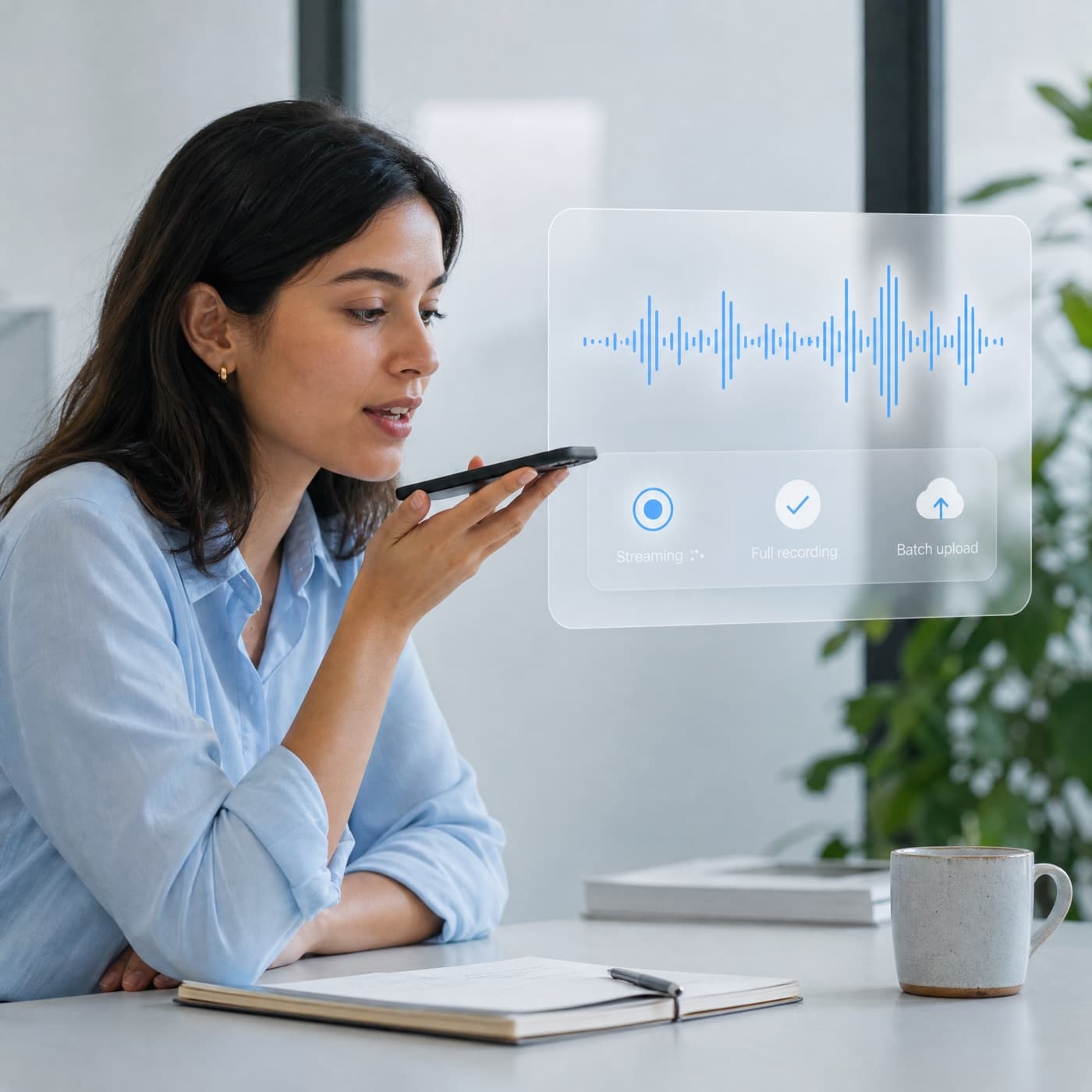
01Capture the right response
Use streaming audio, complete recordings or batch uploads to match the product moment.
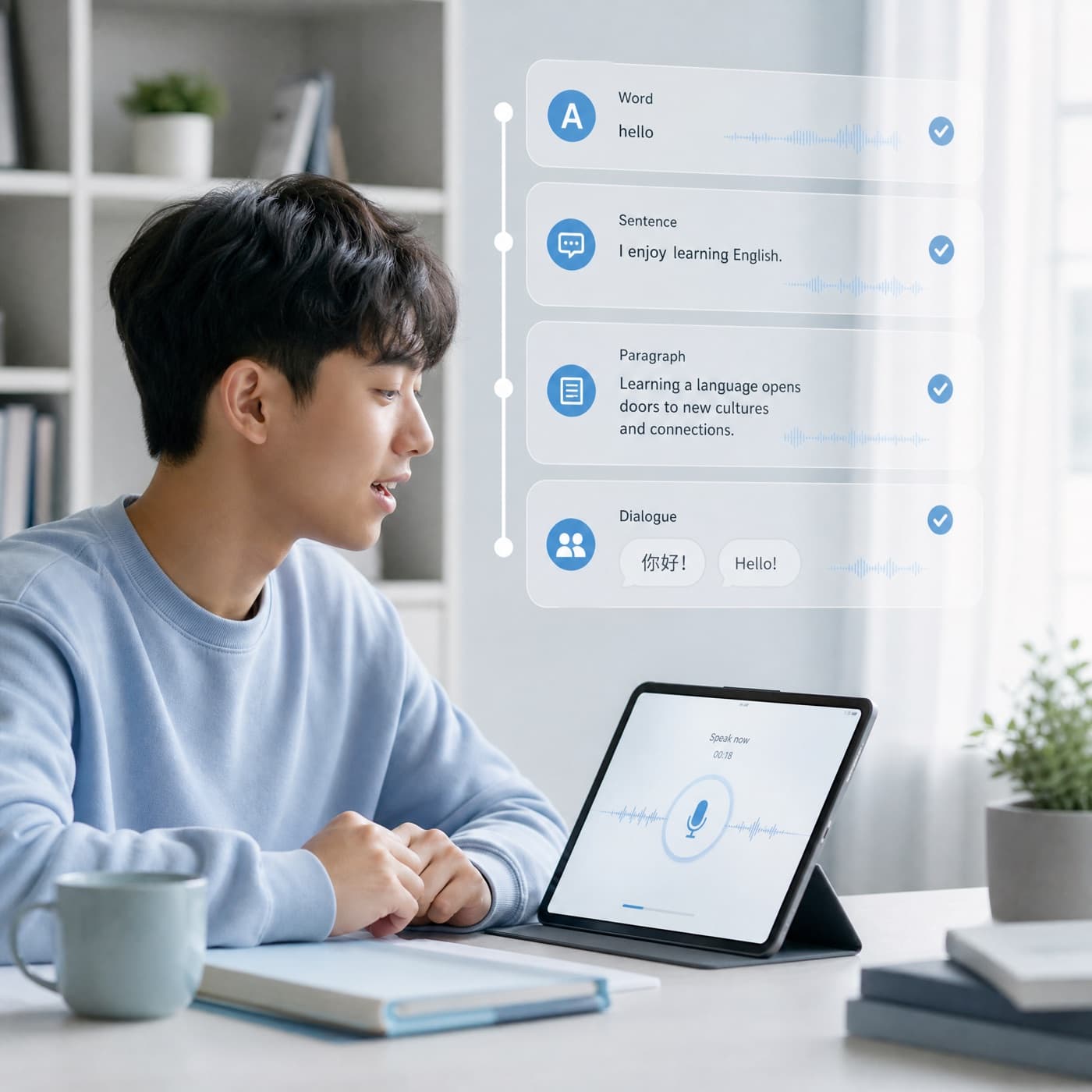 02
02Assess at the right depth
Choose word, sentence, paragraph, dialogue or open-ended tasks in English or Mandarin.
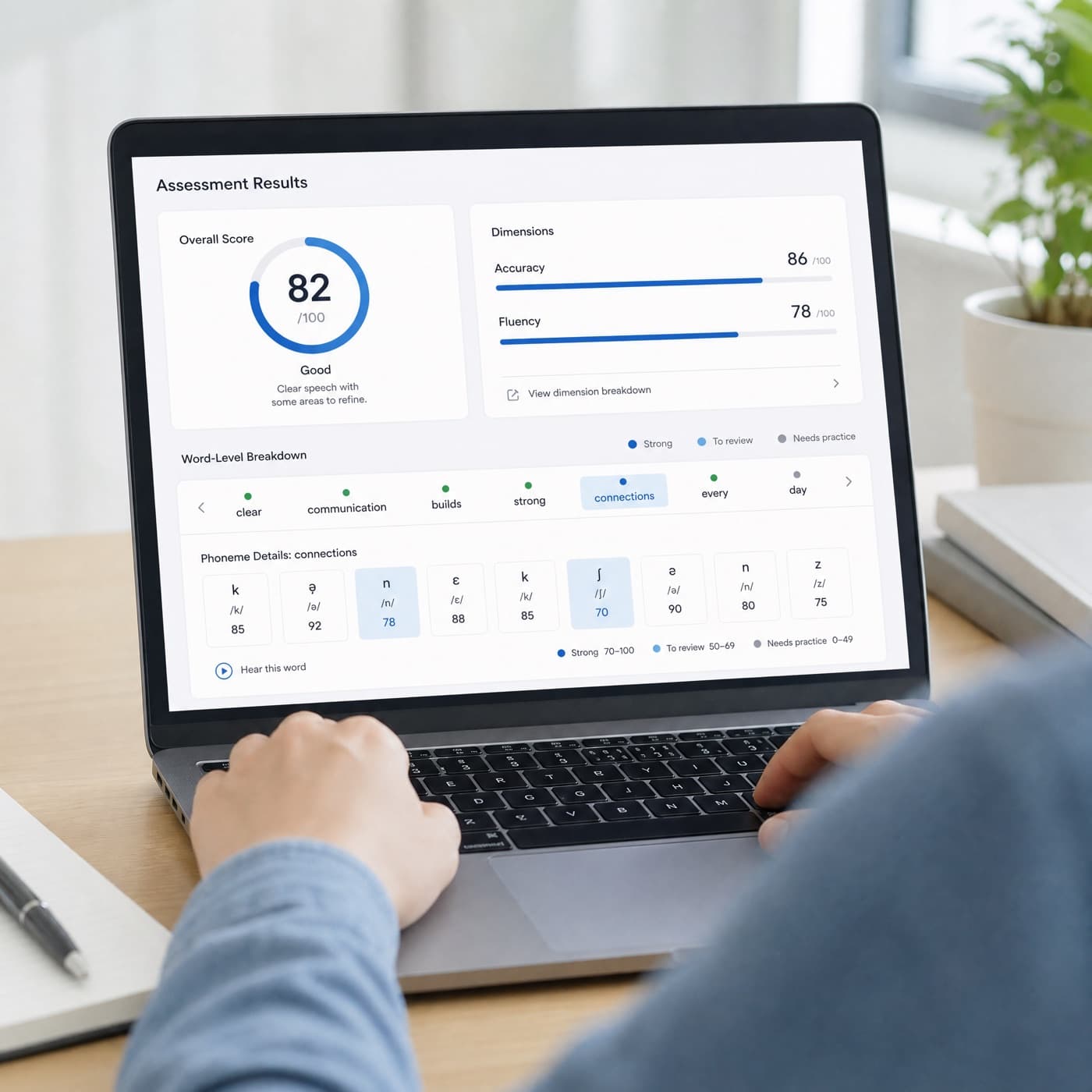 03
03Return usable evidence
Receive stable structured results, from overall dimensions down to word and phoneme detail.
 04
04Drive the next action
Turn the result into feedback, intervention, a report, a new exercise or a professional review.
/technology underneath
The capabilities still matter—after the customer sees where they fit.
These are the technical building blocks used across the six scenarios. Product teams can combine them according to the learning task instead of choosing a scenario by API name.
Shared platform core
Common scoring, diagnosis, open-ended evaluation and structured evidence across both languages.
Explore capabilityEnglish Pronunciation Assessment
Pronunciation, phoneme, stress, liaison and fluency evidence for English learning and assessment.
Explore capabilityChinese Pronunciation Assessment
Tone contour, pinyin, neutral tone, erhua, sandhi and PSC-aligned word assessment.
Explore capability/plan your integration
Tell us the scenario. We’ll map the assessment flow.
Bring your learner journey, speaking task, language, expected volume and deployment constraints. We can help identify the right assessment type and integration path.